Water quality is crucial for industries, municipalities, and ecosystems. Azecolab provides comprehensive surface and groundwater testing to detect contamination, ensure compliance, and protect public health. Our lab supports businesses, agencies, and consultants in monitoring water for risk management and remediation.
Surface water testing involves analyzing water bodies such as rivers, lakes, reservoirs, estuaries, and wetlands. These water sources are exposed to environmental influences, including:
Industrial and municipal wastewater discharge
Agricultural runoff (fertilizers, pesticides, and animal waste)
Regular testing ensures that surface water meets environmental safety standards, prevents pollution, and supports industries that depend on high-quality water sources
What is Groundwater Testing?
Groundwater is water stored in underground aquifers and is a major source of drinking water, irrigation, and industrial use. Contamination can occur due to
Industrial spills and leaks (petroleum, solvents, heavy metals)
Septic system failures and leachate from landfills
Saltwater intrusion in coastal areas
Testing groundwater quality is essential for human health, industrial operations, and regulatory compliance.
The Importance of Proper Sample Collection and Handling
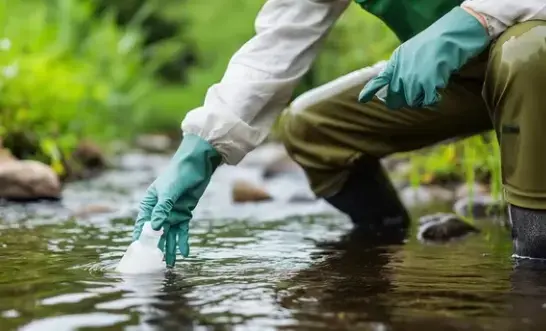
The accuracy of water quality analysis depends on proper sampling techniques and handling procedures. Errors during collection can lead to inaccurate results, affecting compliance and decision-making.
Key Factors in Water Sample Collection
Site Selection
Samples must be collected from strategic locations based on potential contamination risks.
Sterile and Approved Containers
Different tests require specific bottles (e.g., glass for organics, plastic for metals).
Chain of Custody Documentation
Proper record-keeping ensures sample integrity and traceability.
Preservation and Holding Time
Some parameters require immediate stabilization (e.g., acidification for metals, refrigeration for microbiological tests).
On-Site Analysis for Critical Parameters
Some parameters must be tested immediately on-site to ensure accuracy.
On-Site Testing Parameters
Certain water quality parameters change rapidly once the sample is collected. Therefore, field testing is necessary for immediate measurements, including:
pH (Acidity/Alkalinity of the water)
Dissolved Oxygen (DO) (Essential for aquatic life)
Salinity (Salt concentration affecting ecosystems and water use)
Turbidity (Clarity of water, indicating suspended solids)
Conductivity (Ability of water to conduct electricity, related to dissolved ions)
These tests help provide real-time water quality assessments and support immediate decision-making in the field.
Laboratory Testing for Surface and Groundwater Quality
Azecolab performs detailed laboratory analysis to identify contaminants and assess compliance with industry standards. Our testing services include:
Chemical Analysis
Heavy Metals: Lead, Arsenic, Mercury, Cadmium, Chromium
Toxicity Characteristic Leaching Procedure (TCLP) – Assesses the potential for hazardous waste leaching.
Industries & Clients We Serve
Industrial Facilities & Manufacturers
Compliance with wastewater discharge and groundwater monitoring regulations.
Municipalities & Water Utilities
Drinking water and source water protection programs.
Real Estate & Property Developers
Environmental impact assessments and groundwater studies.
Agribusiness & Farming Operations
Monitoring irrigation water and runoff contamination.
Oil & Gas Companies
Spill investigations and regulatory compliance testing.
Construction & Land Development Firms
Stormwater pollution prevention plans (SWPPP).
Environmental Consultants & Government Agencies
Long-term water quality monitoring programs.
Why Choose Azecolab for Water Testing?
Accurate & Reliable Results
Advanced analytical techniques for precise data.
Fast Turnaround Time
Efficient sample processing to meet compliance deadlines.
On-Site & Laboratory Testing
Complete solutions from field sampling to certified lab analysis.
Customized Testing Programs
Tailored solutions for corporate and industrial clients.
Regulatory Expertise
Compliance with industry and government standards.
Ensure Water Quality & Compliance with Azecolab
Protect your operations, meet regulatory requirements, and safeguard the environment with Azecolab’s surface and groundwater testing services. Contact us today to discuss your testing needs.
Discover the cutting-edge technology, precision equipment, and expertise that power our testing and calibration services. Watch now to see excellence in action!
Accredited for Excellence in Testing & Calibration
Our laboratory is ISO/IEC 17025 accredited for both Testing and Calibration, ensuring the highest level of quality, reliability, and compliance in our services.
Azecolab offers a wide range of testing services, including water, air, and soil analysis, oil and fuel testing, food and beverage testing, microbiology, chemical analysis, and calibration services.
How can I submit a sample for testing?
You can submit your samples by visiting our laboratory, scheduling a pickup service, or mailing your samples following our sample collection guidelines. Please contact us for specific instructions based on the type of test required.
How long does it take to receive test results?
Turnaround times depend on the type of analysis being conducted. Standard tests typically take 5–7 business days, while more complex tests may require additional time. Expedited services are available upon request.
Are Azecolab’s tests accredited and compliant with regulations?
Yes, Azecolab adheres to international quality standards and is accredited under recognized bodies to ensure accuracy and reliability. We comply with ISO, EPA, ASTM, and other industry regulations.